


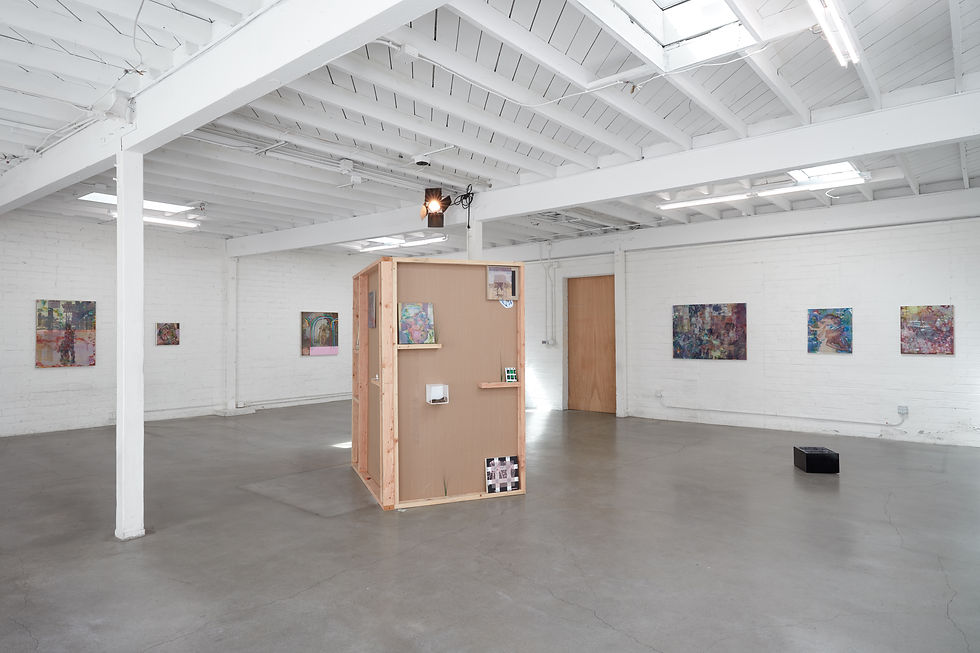


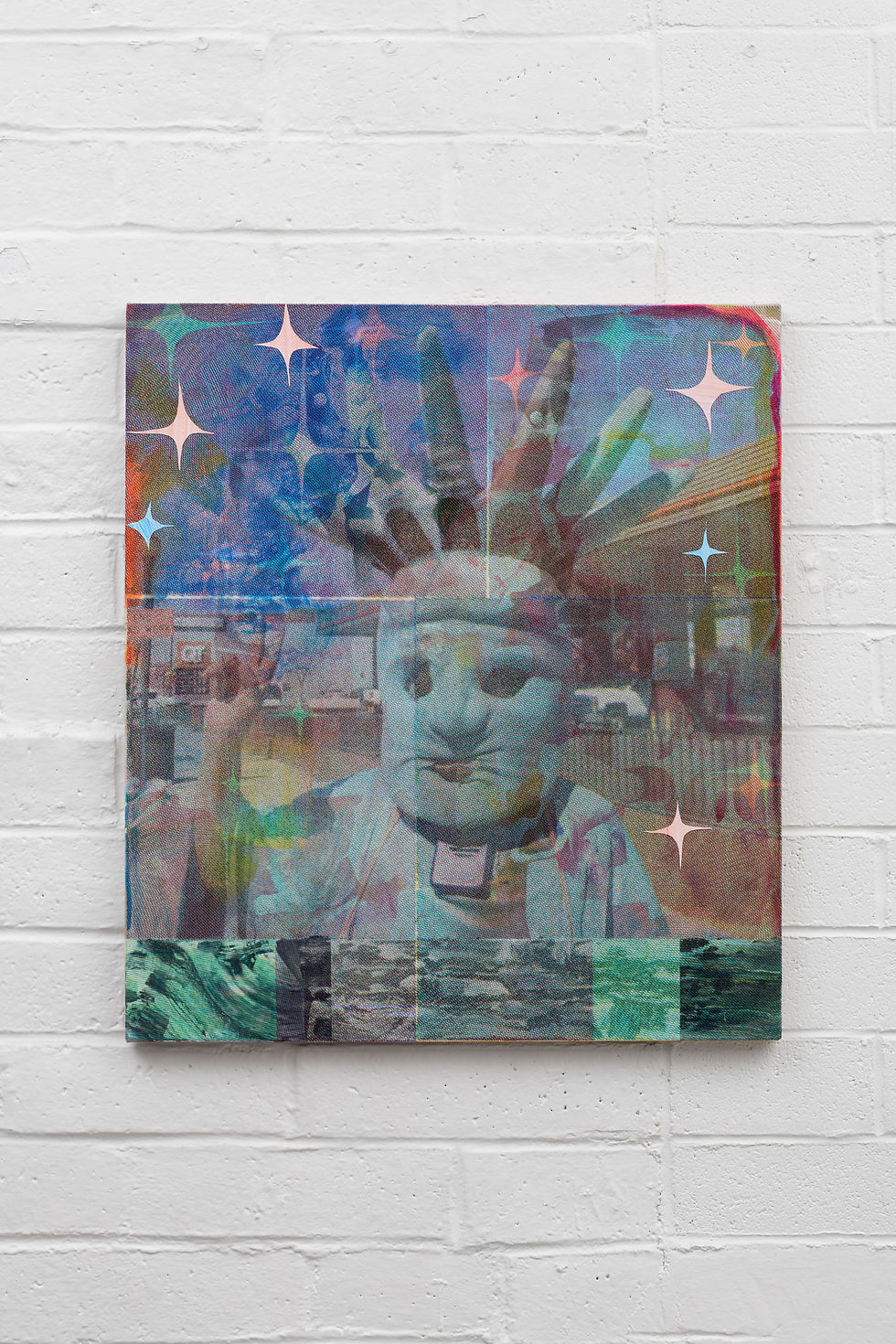


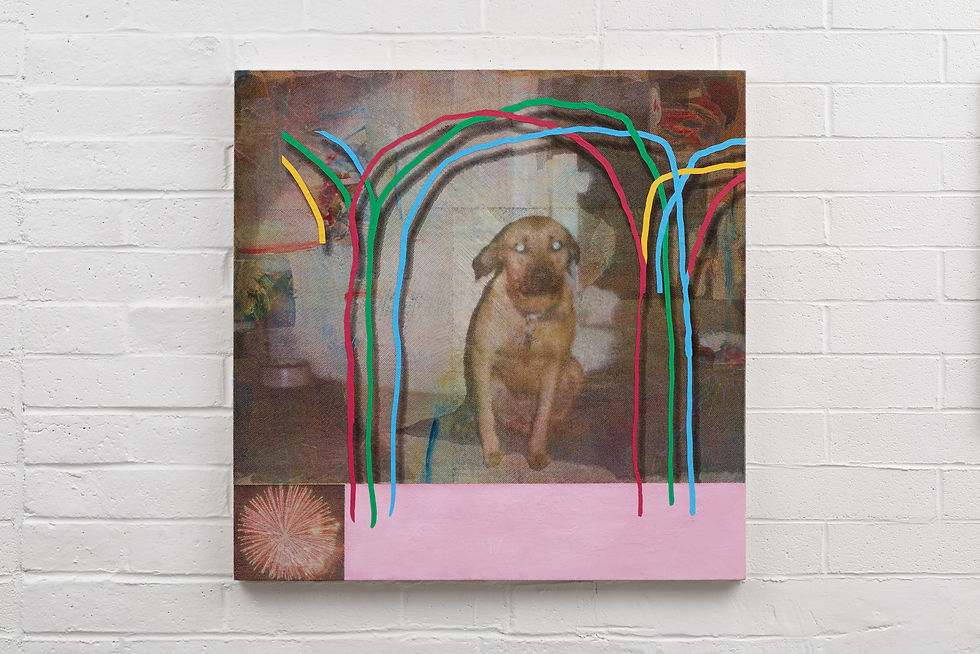
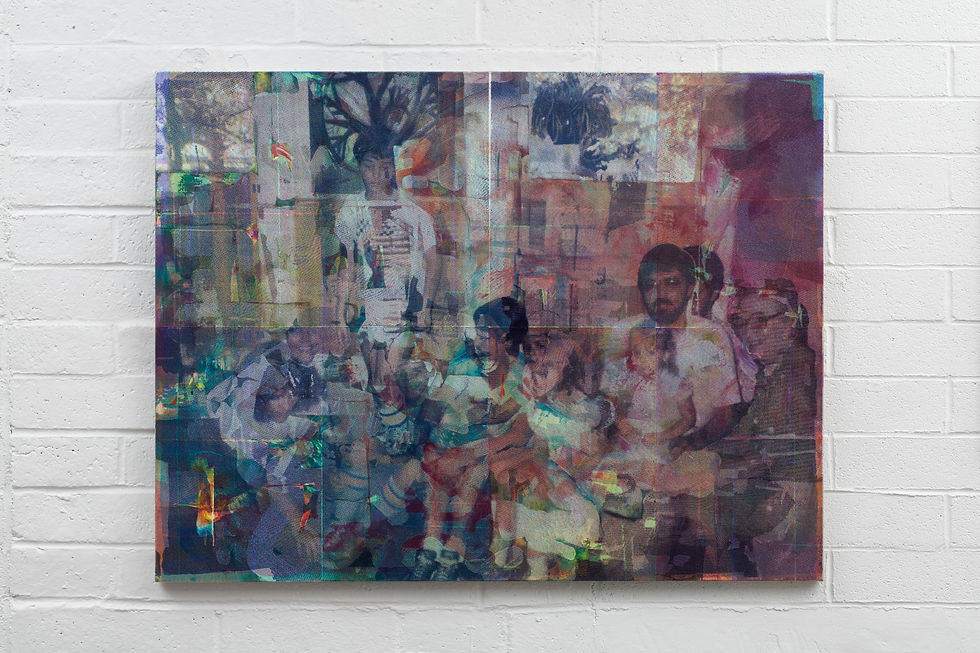


Though not commonly used in modern parlance “juke” is a word that has multiple meanings. In the context of sports and contemporary slang, to juke is to mislead an opponent through deceptive movements. Think about the way a player will turn or lunge in one direction and then quickly counter in the other to misdirect their challenger. Juke is also an anachronistic term for dancing, as in juke joint or juke box. This somewhat outmoded and multivalent term is one way of contemplating this recent body of paintings. Using a variety of apparatuses, the paintings in Juke employ technical images that are layered with disruptions, collaged, and combined with painterly interventions. The photographic image purports to capture moments objectively. A photograph records light onto film, or more often a sensor, that seemingly records objects and events in a manner that stands in for reality. A photograph fools the eye into perceiving a moment that has passed in time or perhaps never really existed. Like the infamous painting by Wile E. Coyote on the mountain wall of a tunnel road, photographs can, even if we are aware of their artifice, lead us into sensing a type of reality through the illusion of its realism. The coyotes attempt to juke his adversary is countered by the roadrunners ability to turn the fake tunnel into an actual thing, escaping capture in the process.
Images, especially photographic ones can convince, and stand in as a kind of index of reality. A photograph is not an impartial record, however. The lens has its own point of view: perspective, timing, and choice of subject matter affect our understanding of photographs even before one factors in the potential for manipulation, deceptive editing, or even complete artificial fabrication. Photography occupies a unique position to lead our brains toward the idea that we are experiencing reality while simultaneously trafficking in the psychological trappings of fear, longing, desire, and other persuasive human emotions. The photographs found in Juke originate from personal archives and found or composite images. In this sense they carry the weight of personal biography, intimate relationships, and a charged, almost magical, ability to stir emotion while also being situated in a realm of impartiality. Juke allows the image to be both evidence of objective reality and record of emotional significance in a collision that renders aesthetic objects meant for the experience of visual pleasure, emotional reflection, and intellectual contemplation. These paintings are not records that pretend to document a universally objective reality but instead, celebrates the mutable interpretability of images in an age where one cannot afford to take for granted the face value intention of our increasingly visual world. In this sense Juke does not seek to mislead or misdirect the viewer into a false reality but engages in the dance of meaning and feeling that potent images and mark making elicits.